

Table of Contents
Easy Baked Flounder Recipe – Tender, Flaky Fish with Lemon and Garlic
There is something especially satisfying about a seafood dinner that delivers a golden, crispy coating while keeping the fish inside tender, moist, and delicate. Baked Flounder is a wonderful example of how a few simple ingredients can transform mild white fish into a comforting meal that feels special enough for a weekend dinner but easy enough for a busy weeknight. With its Parmesan and panko crust, fragrant garlic, melted butter, and fresh lemon, this oven-baked fish brings together the flavors and textures that make homemade seafood so enjoyable.
BAKED FLOUNDER INGREDIENTS YOU’LL NEED
The beauty of Baked Flounder lies in the way a small number of everyday ingredients work together. The fish provides a delicate foundation, the egg creates a surface for the coating, and the combination of panko, Parmesan, garlic, and seasonings gives each fillet its savory crust.
The following quantities follow the reference recipe from Melissa’s Southern Style Kitchen. The main recipe serves six people and uses approximately two pounds of skinless flounder fillets.
BAKED FLOUNDER FISH AND COATING INGREDIENTS
Flounder Fillets: Six large, skinless flounder fillets weighing approximately two pounds in total form the base of this recipe. Flounder has a mild flavor and delicate flesh that cooks relatively quickly. Choose fillets of reasonably similar thickness so they finish cooking at approximately the same time.
Vegetable Oil or Olive Oil: Two tablespoons of vegetable oil or olive oil are used to coat the baking sheet. This helps prevent sticking and supports browning on the underside of the fish.
Finely Grated Parmesan Cheese: Half a cup of finely grated Parmesan brings a savory, salty flavor to the breadcrumb mixture. Finely grated cheese distributes more evenly than large shreds and helps create a cohesive coating.
Panko Breadcrumbs: Half a cup of panko gives the fish its light, crisp exterior. Panko flakes are airy and irregular, making them particularly useful when you want a crunchy coating without a heavy batter.
Salt: One teaspoon is included in the breadcrumb mixture. Because Parmesan already contributes saltiness, you can season the fish lightly before coating it and adjust future batches to suit your taste.
Lemon Pepper: One teaspoon adds a bright, citrusy flavor with a gentle peppery finish. It complements the mild fish and helps the coating taste fresh rather than heavy.
Fresh Garlic: Three minced garlic cloves add a warm, savory aroma that pairs naturally with Parmesan and butter. Mince the garlic finely so it distributes evenly throughout the coating.
Large Eggs: Two large eggs, beaten in a shallow bowl, help the breadcrumb mixture adhere to the fillets. A thin, even layer of egg is sufficient; allow excess egg to drip away before coating the fish.
Butter: Two tablespoons of melted butter are drizzled over the coated fillets before baking. The butter adds richness and encourages the surface to develop a golden color.
Lemon Wedges and Fresh Parsley: Lemon wedges provide a fresh finishing touch, while chopped parsley adds color and a clean herbal note. Both are used when serving.
For the optional homemade tartar sauce, gather the following ingredients:
- 1 cup mayonnaise
- ½ cup sweet pickle relish or diced dill pickles
- 2 tablespoons minced onion
- 1 tablespoon lemon juice
- 1 tablespoon chopped fresh dill
- 1 teaspoon granulated sugar
- 1 teaspoon salt
- ½ teaspoon granulated garlic
- ¼ to ½ teaspoon lemon pepper or black pepper
The tartar sauce is optional, but it adds a cool, creamy accompaniment that works particularly well with the crisp breadcrumb coating. Its pickle flavor provides a pleasant tang, while lemon juice and fresh dill keep it bright.
BAKED FLOUNDER HOW TO MAKE IT
Start by preheating the oven to 425°F. Allow the oven to reach the correct temperature before putting the fish inside, because a properly heated oven helps the coating begin to brown as the fish cooks.
Brush a large baking sheet with two tablespoons of vegetable oil or olive oil. Spread the oil evenly over the surface so the fillets are less likely to stick. If you prefer, you can use a lightly oiled baking dish instead, although a large baking sheet gives you plenty of room to arrange the fish without crowding.
Remove the flounder fillets from their packaging and pat them dry with paper towels. This is an important preparation step because excess moisture can make the coating less likely to adhere and may prevent it from becoming as crisp as you would like.
Handle the fillets gently. Flounder is a thin, delicate fish, and the flesh can break apart if you pull or press too firmly. If a fillet is particularly thin, use a wide spatula or your hands to support it as you move it.
Season the fish lightly with salt and black pepper. Keep this initial seasoning modest because the breadcrumb mixture will also contain salt, lemon pepper, and Parmesan.
Next, prepare the egg wash. Crack two large eggs into a shallow bowl and beat them with a fork or whisk until the whites and yolks are fully combined. The shallow bowl makes it easier to dip the fillets without bending or breaking them.
In a second shallow bowl, combine the finely grated Parmesan, panko breadcrumbs, minced garlic, salt, and lemon pepper. Stir thoroughly so that the garlic and seasonings are distributed throughout the mixture.
The breadcrumb mixture should look evenly blended, with the Parmesan coating the panko flakes. Break up any large clumps of minced garlic so that the flavor is spread evenly across the fish.
Set up the two bowls beside the prepared baking sheet. Keeping the egg wash and breadcrumb mixture close together makes the coating process easier and minimizes unnecessary handling.
Take one flounder fillet and dip it into the beaten egg. Turn it gently so that both sides are coated, then lift it out and allow any excess egg to drip back into the bowl.
Transfer the fillet to the breadcrumb mixture. Press the coating gently onto both sides, turning the fish carefully until it is covered. The goal is to create an even layer without pressing so hard that the delicate flesh breaks.
Place the coated fillet on the prepared baking sheet. Repeat with the remaining fillets, leaving a little space between each piece. Proper spacing allows hot air to circulate and helps the coating brown instead of becoming damp from trapped moisture.
Once all six fillets are arranged on the pan, sprinkle any remaining breadcrumb mixture over the tops. This helps use the coating efficiently and adds a little extra texture to the finished fish.
Melt the two tablespoons of butter and drizzle it evenly over the coated fillets. Try to distribute the butter across the surface rather than pouring it all into one spot. The butter adds flavor and helps the breadcrumbs develop a more attractive golden finish.
Place the baking sheet in the preheated oven. Bake until the coating is lightly golden and the fish flakes easily with a fork. The recipe card lists a 15-minute cooking time, while the detailed instructions give approximately 18–20 minutes. Because fillet thickness and individual ovens vary, begin checking the fish around the 15-minute mark and continue only as needed.
The fish should look opaque and separate easily into flakes when gently tested with a fork. For a reliable food-safety check, the thickest part should reach 145°F on an instant-read thermometer. Avoid leaving thin fillets in the oven longer than necessary, as overcooking can make them dry.
When the Baked Flounder is ready, remove the pan from the oven and allow the fillets to rest briefly while you prepare the garnishes. Transfer them carefully to a serving platter, using a wide spatula to support the delicate fish.
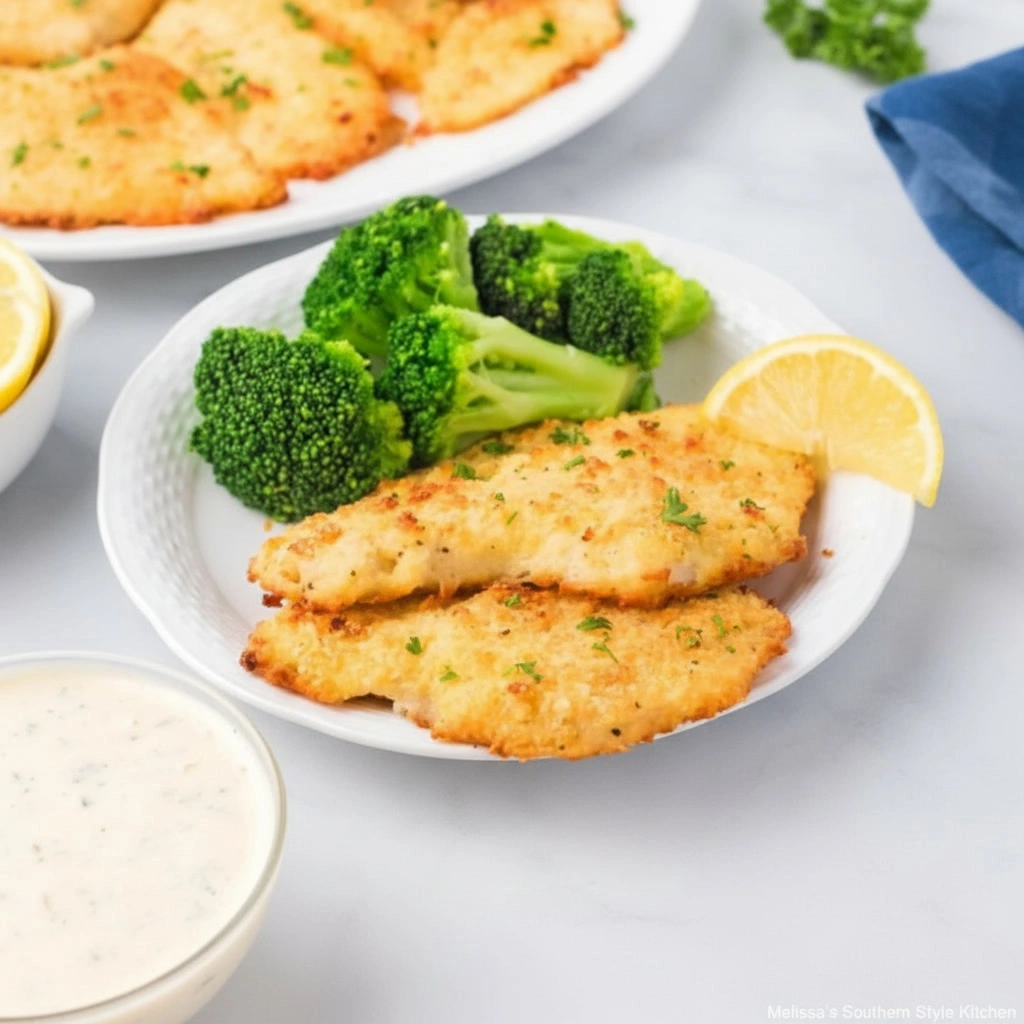
Finish with chopped fresh parsley and lemon wedges. Squeezing a little lemon juice over the hot coating adds brightness and balances the richness of the Parmesan and butter.
Serve immediately while the crust is still at its crispest. If you’re offering homemade tartar sauce, place it in a small bowl alongside the fish so everyone can add as much as they like.
To prepare the optional tartar sauce, combine the mayonnaise, sweet pickle relish or diced dill pickles, minced onion, lemon juice, fresh dill, sugar, salt, granulated garlic, and lemon pepper or black pepper in a medium bowl. Stir until smooth and evenly combined.
Cover the sauce and refrigerate it for at least four hours, or overnight, before serving. This resting time allows the flavors to blend. You can make it up to one day ahead, which is especially convenient when preparing a larger meal.
BAKED FLOUNDER FLAVOR, TEXTURE, AND VARIATIONS
The appeal of Baked Flounder comes from the contrast between its delicate interior and its crisp, savory coating. Flounder has a naturally mild flavor, so it pairs easily with garlic, Parmesan, citrus, and herbs without becoming overwhelmed by strong seasonings.
Panko is responsible for much of the crust’s texture. Compared with fine traditional breadcrumbs, panko creates a lighter coating with larger, airier flakes. When combined with finely grated Parmesan and a little melted butter, it develops a golden surface that provides a satisfying contrast to the tender fish.
Parmesan contributes more than saltiness. Its savory, slightly nutty flavor gives the crust depth, while garlic adds warmth and lemon pepper brings a bright, citrusy edge. The result is a coating that tastes seasoned and flavorful without needing a long list of spices.
The butter is another important part of the recipe. A modest amount adds richness and encourages browning, helping the breadcrumbs develop their appealing color. The lemon served at the table then cuts through that richness and brings freshness to each bite.
For a little extra color and gentle warmth, sprinkle a small amount of smoked paprika into the breadcrumb mixture. This is an optional variation rather than part of the original ingredient list. You can also experiment with your favorite seafood seasoning if you prefer a more pronounced spice blend.
Fresh herbs offer another simple way to change the finished dish. Parsley is the classic garnish, but chopped chives, basil, cilantro, or green onions can provide a different herbal character. Add delicate herbs at the end so their flavor stays fresh.
If flounder is unavailable, another mild white fish can be used. Sole, cod, haddock, or halibut may work well with the same general approach. Keep in mind that thicker fillets can take longer to cook, while thinner pieces may finish sooner. Always check the thickest part rather than relying on time alone.
For a crispier finish, the recipe can also be adapted for an air fryer. Preheat the air fryer according to its instructions and lightly coat the basket or rack with cooking spray. After breading the fish, spray the fillets generously with oil on all sides.
Arrange the fillets in a single layer without crowding the basket. Depending on its size, you may need to work in batches. Cook at 400°F for five minutes, turn the fish carefully, spray again with oil, and cook for approximately another five minutes, checking for golden breadcrumbs and properly cooked fish.
Another option is to cook the coated fillets in a skillet, although this changes the method from oven-baked to pan-fried. The reference recipe gives a stovetop alternative of approximately two to three minutes per side over medium heat, or until the fish flakes easily.
Regardless of the cooking method, the most important principles remain the same: handle the fish gently, keep the coating even, avoid crowding the pan, and check the fish before it becomes overcooked.
BAKED FLOUNDER SERVING, STORAGE, AND FREQUENTLY ASKED QUESTIONS
Baked Flounder is best served straight from the oven, when the Parmesan-panko crust is warm and crisp and the fish remains tender inside. Arrange the fillets on a platter with fresh lemon wedges and chopped parsley for a simple presentation that feels inviting without requiring elaborate decoration.
For a balanced dinner, pair the fish with a vegetable side and a comforting starch. Roasted potatoes make a natural companion because their crisp edges echo the texture of the coating. Steamed broccoli, green beans, corn on the cob, and a crisp coleslaw are also excellent choices.
For a Southern-inspired meal, serve Baked Flounder with coleslaw, corn, or green beans. If you prefer a lighter plate, pair it with steamed vegetables and a fresh green salad. Homemade tartar sauce can be served on the side, while lemon butter sauce offers another delicious accompaniment.
If you are entertaining, prepare the tartar sauce in advance and keep it refrigerated until serving. You can also measure the dry coating ingredients ahead of time, although the fish itself is best breaded shortly before baking for the best texture.
Leftover Baked Flounder should be transferred to an airtight container or wrapped securely and refrigerated promptly. The reference recipe recommends keeping leftovers in the refrigerator for up to two days. The coating may soften as it sits, but the fish can still make a convenient next-day meal.
To reheat, place the fish in a 375°F oven for a few minutes, checking frequently until it is heated through. An air fryer can also help restore some of the coating’s crispness. Avoid reheating for longer than necessary because flounder is delicate and can dry out quickly.
The original recipe also notes that leftovers can be frozen for up to one month. For the best quality, wrap the fish securely and store it in a freezer-safe container. Reheat from frozen in a 375°F oven or an air fryer, checking that it is heated through before serving.
BAKED FLOUNDER FREQUENTLY ASKED QUESTIONS
How do I know when Baked Flounder is done?
The flesh should look opaque and separate easily into flakes when tested gently with a fork. For a more precise check, the thickest part of the fish should reach an internal temperature of 145°F. Thin fillets can cook quickly, so begin checking before the end of the expected cooking time.
Can I use frozen flounder fillets?
Yes. Frozen flounder can be used, but thaw it according to the package instructions and pat it thoroughly dry before breading. Removing excess moisture helps the egg and breadcrumb coating adhere more effectively.
Can I use another type of fish?
Yes. Sole, cod, haddock, and halibut are possible alternatives. Choose a mild, flaky white fish and adjust the cooking time to match the thickness of the fillets.
What makes the coating crispy?
Panko breadcrumbs create a light, airy crust, while finely grated Parmesan adds flavor and helps the coating brown. The melted butter contributes richness and encourages a golden finish. Avoid crowding the baking sheet so moisture does not become trapped between the fillets.
Can I make Baked Flounder without Parmesan?
You can omit the Parmesan, although the flavor and texture of the coating will be different. If you need a substitute, consider another finely grated hard cheese that browns well. Keep in mind that changing the cheese changes the original recipe.
Do I have to make the tartar sauce?
No. The tartar sauce is optional. Baked Flounder is delicious with just fresh lemon and parsley, or you can serve it with a simple lemon butter sauce.
Can I prepare the tartar sauce ahead of time?
Yes. Prepare it up to one day in advance and refrigerate it for at least four hours before serving. This resting time helps the pickle, onion, lemon, and dill flavors blend.
Why is my baked fish coating falling off?
Excess moisture on the fish, too much egg wash, or rough handling can make the coating less secure. Pat the fillets dry, let excess egg drip away, press the breadcrumbs on gently, and use a wide spatula when transferring the fish.
Can I make this recipe in an air fryer?
Yes. The reference recipe gives an air-fryer method using 400°F, with approximately five minutes of cooking on each side. Spray the coated fillets with oil and arrange them in a single layer. Check for doneness rather than relying exclusively on the clock.
What should I serve with Baked Flounder?
Roasted potatoes, steamed broccoli, corn on the cob, Southern coleslaw, green beans, and other simple vegetable sides all work well. Fresh lemon and tartar sauce provide a bright, tangy contrast to the savory coating.
Baked Flounder is a lovely reminder that a satisfying seafood dinner does not need to be complicated. With tender white fish, a golden Parmesan-panko crust, fragrant garlic, and a touch of butter, this recipe offers plenty of flavor using familiar ingredients and a straightforward oven method.
The small details make the difference: drying the fish before breading, handling the fillets gently, leaving space between them on the baking sheet, and checking for doneness at the right time. These steps help protect the delicate texture of the flounder while giving the coating its best chance to become golden and crisp.
Serve the finished fish with fresh lemon, parsley, and homemade tartar sauce if you like. Add roasted potatoes and vegetables for a complete family dinner, or keep things simple with a fresh salad and a few lemon wedges. Whether you’re cooking seafood for a regular weeknight meal or planning a relaxed dinner with family and friends, Baked Flounder is an approachable recipe that brings together comfort, freshness, and satisfying texture. Make it once, adjust the sides to suit your table, and enjoy a homemade fish dinner that feels both simple and special