
Table of Contents
NIGERIAN CHICKEN STEW – THE ULTIMATE WEST AFRICAN COMFORT FOOD
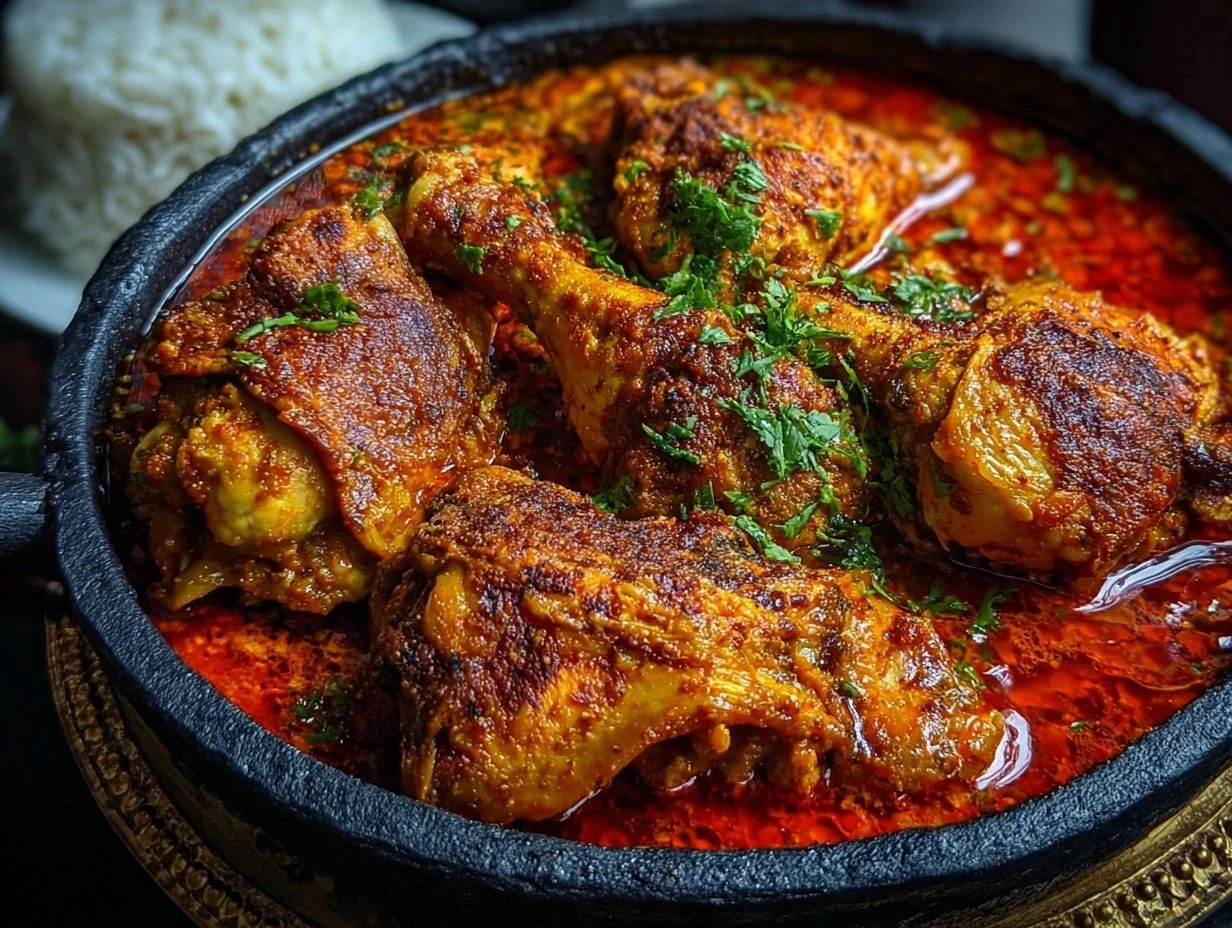
Nigerian Chicken Stew is not just a meal—it is an experience rooted in tradition, family, and shared moments. Rich, bold, and deeply comforting, this iconic West African dish brings together perfectly seasoned chicken and a slow-simmered tomato-and-pepper sauce that delivers warmth with every spoonful.
This stew is a cornerstone of Nigerian home cooking. It is present at everyday family meals, festive celebrations, Sunday lunches, and special gatherings. The aroma alone has the power to bring people into the kitchen, creating anticipation long before the dish is served.
What makes Nigerian Chicken Stew so special is its harmony of flavors. Tomatoes provide sweetness and body, peppers bring heat and character, spices add warmth and depth, and the chicken absorbs everything as it cooks slowly. The result is a dish that feels hearty without being heavy, spicy without being aggressive, and deeply satisfying without being complicated.
Served with rice, fried plantains, yams, or garri, Nigerian Chicken Stew is a recipe that crosses borders while remaining proudly authentic.
NIGERIAN CHICKEN STEW AND THE ESSENCE OF WEST AFRICAN COOKING
West African cuisine is built on patience, intuition, and respect for ingredients. Nigerian Chicken Stew embodies these values perfectly. The method is equally as crucial as the components. From marinating the chicken to frying the tomato base properly, each step contributes to the final depth of flavor.
Unlike quick sauces, this stew relies on slow reduction. Tomatoes are cooked until their raw acidity disappears, spices are allowed to bloom, and the sauce thickens naturally. This method creates layers of flavor that feel comforting and familiar, yet bold and exciting.
Another defining feature of Nigerian Chicken Stew is its adaptability. Every household has its own variation. Some prefer it extra spicy, others milder. Some add more oil for richness, while others keep it lighter. Despite these variations, the soul of the dish remains the same—rich tomato flavor, well-seasoned chicken, and a sauce meant to be enjoyed with starches.
INGREDIENTS YOU’LL NEED FOR NIGERIAN CHICKEN STEW
CHICKEN AND SEASONING FOUNDATION
• 2.5 lbs chicken thighs or drumsticks, bone-in
• 1 teaspoon salt
• 1/2 teaspoon black pepper
• 1 teaspoon paprika
• 1 teaspoon curry powder
• 1 teaspoon dried thyme
• 1 large onion, chopped
• 1/4 cup vegetable oil
Bone-in chicken is ideal for this recipe. As it cooks, the bones release flavor into the sauce, creating a richer and more satisfying stew. The spice blend used here reflects classic Nigerian seasoning—simple, aromatic, and deeply flavorful.
TOMATO AND PEPPER BLEND
• 4 large Roma tomatoes
• 1 large red bell pepper
• 1 small red onion
• 1–2 scotch bonnet peppers, based on your preferred level of spiciness
This blend forms the heart of Nigerian Chicken Stew. Tomatoes provide sweetness and color, bell peppers add body, onions contribute depth, and scotch bonnet peppers deliver authentic West African heat.
FINAL FLAVOR BUILDERS
• 2 tablespoons tomato paste
• 1 teaspoon garlic powder
• 1 teaspoon ginger powder
• 1 bouillon cube (Maggi or Knorr)
• Salt to taste
These ingredients deepen the stew and give it its signature savory richness. The bouillon cube, in particular, is a classic element in Nigerian kitchens, adding umami and balance.
STEP-BY-STEP NIGERIAN CHICKEN STEW PREPARATION
PREPARING AND MARINATING THE CHICKEN
Place the chicken pieces in a large bowl and season with salt, black pepper, paprika, curry powder, thyme, and chopped onion. Make sure all the pieces are uniformly covered by mixing them thoroughly.
Give the chicken at least half an hour to marinate.This resting time allows the spices to penetrate the meat, ensuring that the chicken is flavorful all the way through, not just on the surface.
SEARING THE CHICKEN FOR DEPTH AND COLOR
Heat the vegetable oil in a large pot or deep skillet over medium-high heat. Add the marinated chicken pieces and sear until golden brown on all sides.
This step is essential. Searing creates a flavorful crust on the chicken and leaves behind browned bits in the pot, which later enrich the sauce When the chicken is browned, take it out and put it aside.
PREPARING THE TOMATO PEPPER BASE
Blend the Roma tomatoes, red bell pepper, red onion, and scotch bonnet peppers until smooth. The mixture should be vibrant red, thick, and aromatic.
This blended base is the backbone of Nigerian Chicken Stew, responsible for both its color and its bold flavor profile.
FRYING THE TOMATO PASTE
Add the tomato paste to the remaining oil in the pot and fry for about two minutes, stirring constantly. This step removes rawness and intensifies the tomato flavor.
Properly fried tomato paste gives the stew a deeper color and a more complex taste.
COOKING DOWN THE SAUCE
Pour the blended tomato mixture into the pot. Cook over medium heat for about ten minutes, stirring occasionally. The sauce should thicken, darken slightly, and lose its raw tomato smell.
This reduction process is what transforms simple ingredients into a rich, cohesive stew.
SEASONING AND FINAL SIMMER
Add garlic powder, ginger powder, the bouillon cube, and salt to taste. Stir well to combine.
Return the seared chicken to the pot and reduce the heat. Allow the stew to simmer gently for 25 to 30 minutes, occasionally spooning sauce over the chicken. The sauce should reduce and cling beautifully to the meat.
NIGERIAN CHICKEN STEW TEXTURE, BALANCE, AND FLAVOR NOTES
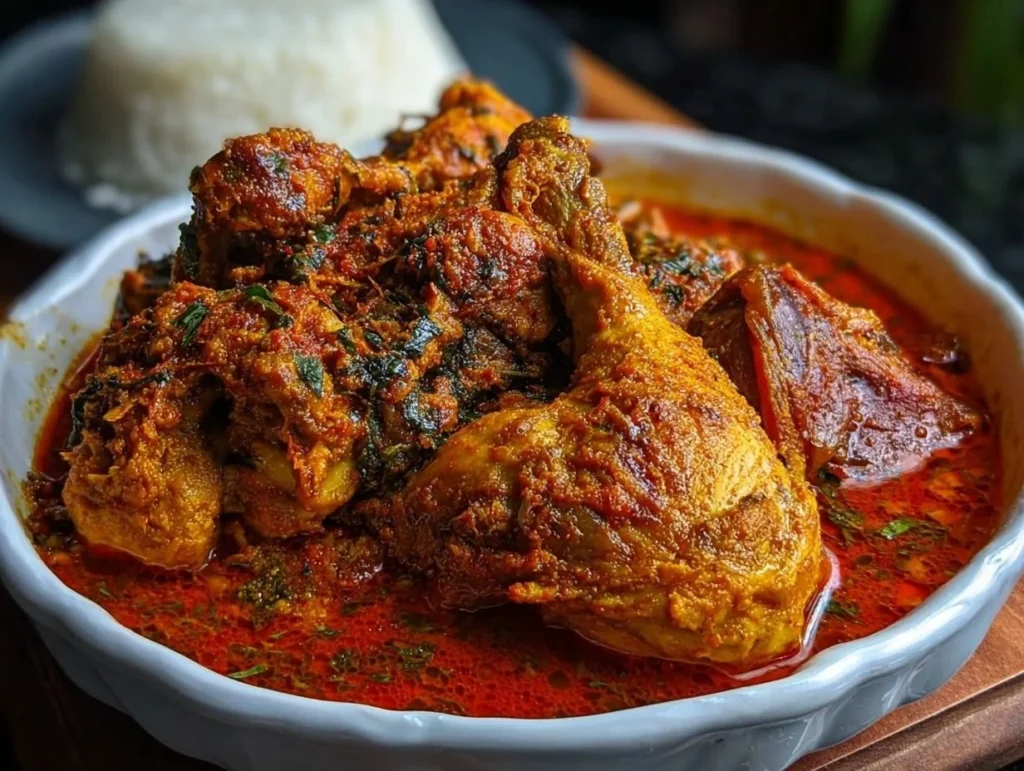
A well-made Nigerian Chicken Stew should be thick, glossy, and deeply red. The sauce should coat the chicken without being watery or greasy.
Flavor-wise, the stew should strike a balance between sweetness, heat, and savoriness. The tomatoes mellow as they cook, the peppers provide warmth, and the spices tie everything together into a comforting whole.
NIGERIAN CHICKEN STEW VARIATIONS AND CREATIVE IDEAS
EXTRA SPICY VERSION
Add an extra scotch bonnet pepper or blend the seeds for more heat.
MILD VERSION
Use only one pepper or substitute with a mild red chili.
BONELESS CHICKEN OPTION
Boneless chicken works well but requires a shorter simmering time to avoid dryness.
MEAL PREP VERSION
Cook a larger batch and portion with rice for easy weekly meals.
SERVING NIGERIAN CHICKEN STEW WITH STYLE
Serve Nigerian Chicken Stew hot with fluffy white rice, fried plantains, boiled yams, or garri. Garnish with fresh herbs, scallions, or sliced chili for added freshness and color.
For gatherings, present the stew in a large serving dish surrounded by multiple sides, allowing guests to customize their plates.
STORAGE AND MAKE-AHEAD NIGERIAN CHICKEN STEW TIPS
Keep leftovers in the fridge for up to four days in an airtight container. The flavors deepen overnight, making the stew even better the next day.
This stew freezes exceptionally well for up to three months. Thaw overnight and reheat gently, adding a splash of water if necessary.
FREQUENTLY ASKED QUESTIONS ABOUT NIGERIAN CHICKEN STEW
Can Nigerian Chicken Stew be made ahead of time
Yes, it is even more flavorful the next day.
What can replace scotch bonnet peppers
Habanero peppers are the closest substitute.
How do I achieve a thick sauce
Simmer uncovered and allow natural reduction.
WHY NIGERIAN CHICKEN STEW IS ALWAYS A GOOD IDEA
This dish is comforting, nourishing, and deeply rooted in tradition. It transforms simple ingredients into a meal that feels generous, satisfying, and memorable.
FINAL THOUGHTS ON NIGERIAN CHICKEN STEW
Nigerian Chicken Stew is proof that great cooking does not require complexity—only patience, balance, and care. Once you master it, it becomes a recipe you return to again and again.